FREE CATALOG





Polyester Work Shirts: A Comprehensive Guide to Performance, Customization, and Long-Term Value
- Addtime: 2025-12-30 / View: 175
In modern work environments, clothing is no longer a secondary consideration. Work shirts play a critical role in employee comfort, safety, brand identity, and operational efficiency. Among the wide range of fabric options available today, polyester work shirts have become one of the most widely adopted solutions across global industries. Their popularity is not accidental; it is the result of decades of material innovation, manufacturing optimization, and practical performance in real working conditions.
From factories and warehouses to service industries and corporate environments, polyester work shirts offer a balance of durability, affordability, and adaptability that few other materials can match. This article provides an in-depth examination of polyester work shirts, exploring their material foundations, performance benefits, industry applications, customization capabilities, and long-term business value.
The Material Foundation of Polyester Work Shirts
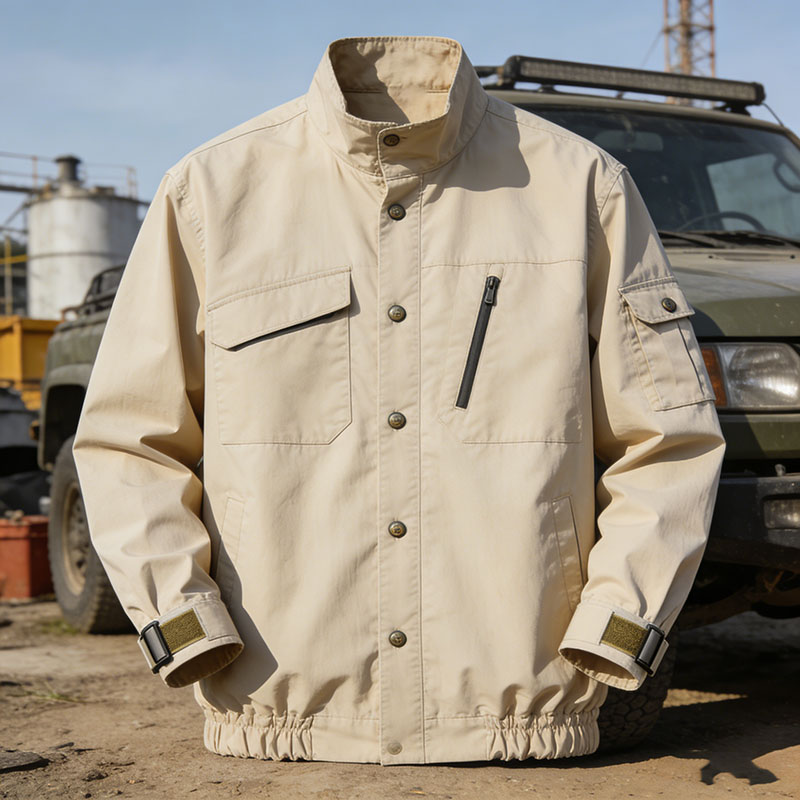
Polyester is a synthetic fiber developed to address many of the limitations found in traditional natural fabrics. Unlike cotton, which relies heavily on agricultural conditions, polyester is engineered through controlled industrial processes. This allows manufacturers to produce fabric with consistent quality, predictable behavior, and scalable output, all of which are essential for workwear production.
One of the most important characteristics of polyester is its molecular stability. Polyester fibers are strong, resilient, and resistant to stretching or deformation. When used in work shirts, this stability ensures that garments retain their original shape, fit, and structure even after long-term use. Employees who wear polyester work shirts daily benefit from a consistent fit that does not loosen, sag, or shrink over time.
Another key material advantage is low moisture absorption. Polyester fibers do not absorb water in the same way natural fibers do. Instead, moisture is transported along the surface of the fabric and evaporates more quickly. While early polyester fabrics were sometimes criticized for lacking breathability, modern textile engineering has significantly improved airflow and moisture management. Many polyester work shirts now incorporate micro-perforated weaves or moisture-wicking finishes that enhance comfort in both indoor and outdoor environments.
Polyester also offers excellent resistance to environmental stressors. Exposure to sunlight, heat, and repeated washing has minimal impact on the integrity of the fabric. This resistance makes polyester work shirts particularly suitable for demanding industries where uniforms are subjected to harsh conditions on a daily basis.
From a manufacturing standpoint, polyester allows for precise control over fabric weight, texture, and finish. This predictability enables large-scale production with minimal variation, making polyester an ideal foundation for work shirts intended for bulk orders and long-term uniform programs.
Performance Advantages in Daily Work Environments
The real value of polyester work shirts becomes evident in everyday use. Performance is a critical factor for workwear, and polyester consistently meets or exceeds expectations across multiple dimensions.
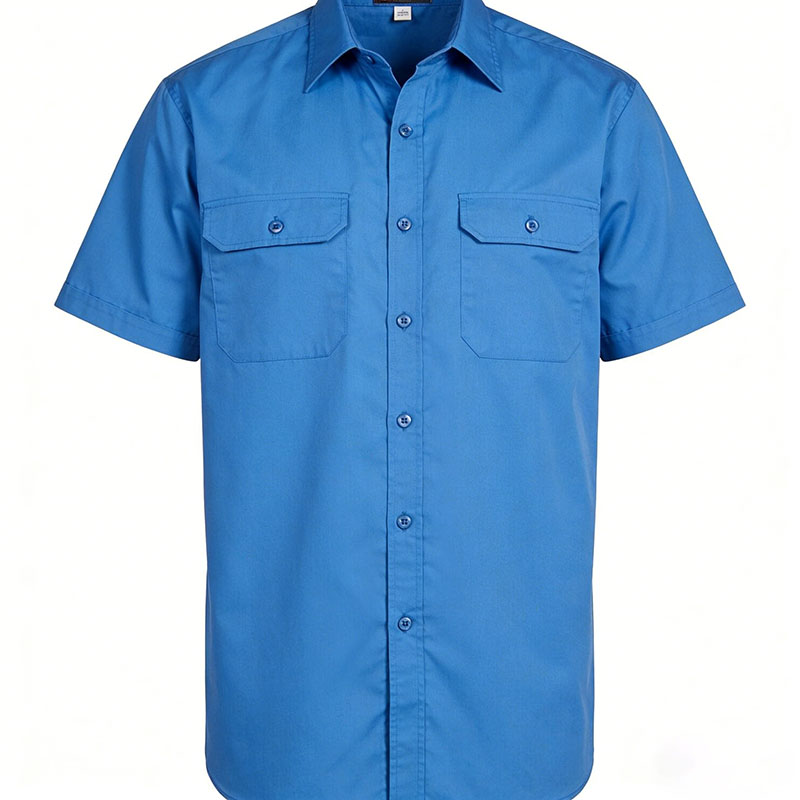
Durability is one of the most widely recognized advantages. Polyester work shirts resist tearing, abrasion, and general wear far better than many natural fabrics. In work environments where physical activity is constant, this durability translates into fewer garment failures and reduced replacement costs.
Another major benefit is wrinkle resistance. Polyester fibers naturally resist creasing, allowing shirts to maintain a clean and professional appearance throughout the workday. This feature is especially valuable for customer-facing roles, where appearance directly impacts brand perception. Employees also benefit from reduced maintenance requirements, as polyester work shirts typically require little to no ironing.
Color retention is another area where polyester excels. The dyeing process for polyester is highly controlled, resulting in colors that remain vibrant even after extensive washing and exposure to sunlight. For businesses that rely on specific brand colors, this consistency ensures that uniforms maintain a unified and professional look across departments and locations.
Comfort has also become a defining feature of modern polyester work shirts. Advances in fabric construction allow manufacturers to create lightweight yet strong garments that support ease of movement. Many designs incorporate ergonomic tailoring, stretch elements, or blended yarns to reduce stiffness and enhance flexibility during long working hours.
Polyester work shirts also perform well in environments involving chemical exposure or industrial contaminants. The fabric is less likely to absorb oils, grease, or mild chemicals, making it easier to clean and maintain. This resistance contributes to both safety and hygiene, particularly in industrial and technical settings.
Industry Applications and Practical Use Cases

Polyester work shirts are used across a broad spectrum of industries, each benefiting from specific performance attributes that the material provides.
In manufacturing and industrial sectors, work shirts must withstand constant movement, mechanical friction, and exposure to machinery. Polyester work shirts offer the toughness required for these environments while maintaining a structured, professional appearance. Reinforced stitching and heavier fabric weights are often used to further enhance durability.
The logistics and warehousing industry places high demands on workwear flexibility and comfort. Workers frequently engage in lifting, carrying, and repetitive motion. Polyester work shirts provide lightweight strength and freedom of movement, helping reduce discomfort during long shifts while maintaining uniform consistency.
In construction and outdoor work, polyester work shirts are often combined with functional features such as reflective strips, reinforced shoulders, or high-visibility colors. Polyester’s resistance to UV exposure and environmental wear makes it suitable for prolonged outdoor use, especially in safety-focused applications.
The hospitality, retail, and service industries prioritize appearance and ease of maintenance. Polyester work shirts are widely adopted in these sectors due to their ability to remain wrinkle-free and presentable even during high-intensity service periods. Quick-drying properties also support frequent laundering, which is essential in hygiene-sensitive environments.
For corporate branding and promotional use, polyester work shirts provide a cost-effective and scalable solution. Companies frequently use them for trade shows, corporate events, and staff uniforms where brand visibility and consistency are essential. The ability to produce large quantities with uniform quality makes polyester an ideal choice for global brands.
Across these industries, polyester work shirts serve as a versatile solution that adapts to both functional and aesthetic requirements.
Customization and Branding Opportunities
Customization is a critical factor for businesses seeking to differentiate their uniforms and reinforce brand identity. Polyester work shirts offer extensive customization possibilities, making them a preferred choice for branded workwear programs.
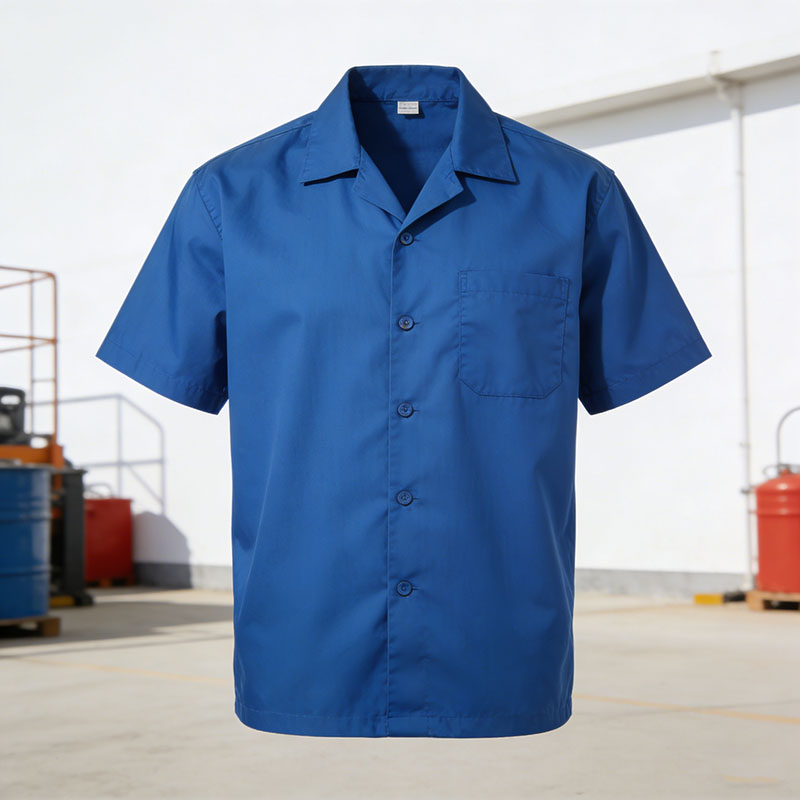
One of the strongest advantages of polyester is its compatibility with multiple decoration techniques. Embroidery, screen printing, heat transfer printing, and sublimation printing all perform exceptionally well on polyester fabrics. Sublimation printing, in particular, allows designs to be permanently infused into the fabric, ensuring long-lasting color and detail.
Polyester work shirts can be customized in terms of fabric structure and weight. Lightweight options are ideal for warm climates or indoor use, while heavier constructions provide added durability for industrial environments. Surface finishes such as anti-static, moisture-wicking, or stain-resistant treatments can further enhance functionality.
Design customization extends to garment construction as well. Businesses can choose from a wide range of options including short or long sleeves, button-down or standard collars, chest pockets, reinforced seams, and contrast panels. These design elements allow work shirts to align closely with operational needs and brand aesthetics.
Color customization is another major strength. Polyester fabric accepts dye evenly, enabling precise color matching for corporate branding. This consistency is particularly important for wholesale clients who require repeat orders over time, as new production runs can match existing uniforms accurately.
For bulk buyers, polyester work shirts offer low-risk scalability. Manufacturers can efficiently produce large volumes without sacrificing quality, making polyester an ideal material for international distribution and long-term uniform planning.
Long-Term Cost Efficiency and Sustainability Considerations
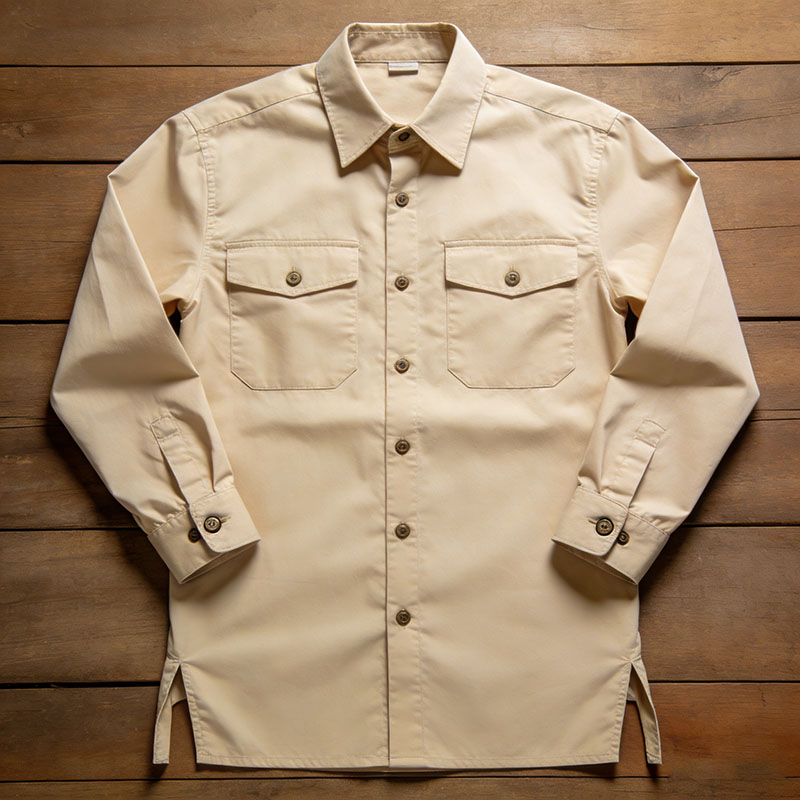
When evaluating workwear investments, businesses must consider total cost of ownership rather than just initial pricing. Polyester work shirts deliver strong long-term value in this regard.
Their extended lifespan reduces the frequency of replacement, resulting in lower overall uniform expenses. This durability is especially valuable for companies managing large workforces, where even small reductions in replacement rates can lead to significant cost savings.
Maintenance costs are also reduced. Polyester work shirts are easy to clean, dry quickly, and resist damage during laundering. Lower energy consumption during washing and drying further contributes to operational efficiency.
From a sustainability perspective, polyester has undergone substantial transformation. Many manufacturers now offer recycled polyester options, produced from post-consumer plastic waste. These fabrics provide the same performance benefits while reducing environmental impact. For companies seeking to align with sustainability goals, recycled polyester work shirts offer a practical and responsible solution.
Additionally, the durability of polyester reduces textile waste by extending garment life cycles. Fewer discarded uniforms mean less environmental strain over time, supporting broader sustainability initiatives.
Polyester work shirts also support efficient global logistics. Their lightweight yet resilient nature minimizes shipping costs and reduces the risk of damage during transportation, making them well-suited for door-to-door delivery and international supply chains.
Polyester work shirts have established themselves as a cornerstone of modern workwear due to their superior durability, performance, customization flexibility, and long-term value. They meet the practical demands of diverse industries while supporting consistent branding and cost-effective uniform management.
By understanding the material properties of polyester and leveraging its advantages in performance and customization, businesses can develop workwear programs that are reliable, scalable, and future-ready. Whether for industrial use, service environments, or corporate branding, polyester work shirts remain one of the most strategic and dependable choices available in today’s global market.